
What I learned Writing My First Rulebook
I just finished the 52Sails rulebook this week. After many revisions and playtesting, it's done and out to proofreaders. This has been a huge learning experience and I plan on using everything I learned to improve and make better games. But getting to this point has taught me things I didn't expect. Here are three lessons I wish I'd known before I started.
Lesson 1: Sometimes You Just Need to Draw It.
I rewrote the movement rules at least five times. Five different versions, all slightly different wording, all of them still felt weird. In my head I knew what I had to explain but no matter how many times I tried to get it out in words, it still felt off. Like I was missing something major for this strange way of handling movement. Changing the way I phrased two or three sentences changed the whole way the rules sounded. No matter what I did, my playtesters kept asking questions. The thing that finally fixed it for me was when I finished the diagrams for movement. Showing it, while explaining it fixed everything. What I lacked in words, the diagram made up for.
The lesson is that some mechanics need pictures. They just do. I spent hours tweaking sentences and thinking about what I was doing wrong when I should've just drawn a diagram from the start and added it into the document.
Lesson 2: Page Sizes Force Impossible Choices.
I wanted 52Sails to be on a page size of A5. I love the page size, if I go to print with the rulebook it's the size I would want the rulebook to be. It keeps everything tight and compact. A5 is a smaller page size, and that comes with its own restrictions. When working on a section and it runs too long for the page size - do you trim it or expand it? These are the choices you have to make. Trimming things down too much can make it too vague, while expanding it could make it seem like I'm trying to inflate the page count.
A good example of this is the boarding rules. I wanted all the diagrams to be close to the same size. Well when I added them to boarding, suddenly it no longer fit on one page. So I had to go back and make tiny edits on verbiage and layout to make it fit within the one page. I knew that there wasn't enough to make it worth two pages, so the only way to go is smaller.
Page size constraints are useful for preventing bloat, but they create their own problems. I reworded a lot of rules purely because they looked weird in the layout. This isn't a bad thing at all. I honestly think having restrictions like this is great. Makes you think more about what you are doing but at the end of the day, it is something you have to think about.
Lesson 3: Creator's Bias Is Real.
Of course the rules make sense - I designed them.
Just because it makes sense to you, doesn't mean that it makes sense. You understand what you are trying to say because well you created it. What you think is something simple and easy to understand, could be completely new to players. I had to rewrite the Kraken scenario in 52Sails three times because I thought it made complete sense to anyone setting it up but I was always being asked questions. That's when I noticed the creator's bias, in my head it was simple but to someone new, explaining how to place terrain and how it interacts with ships is way more complicated than I was giving it credit.
You can't proofread your own game for clarity. You need outside eyes who don't already know how it works, or at least someone who isn't you. Every designer has this blind spot.
These were three major lessons of the many I learned while working on 52Sails. Sometimes you need to draw it out, page size WILL impact your rule design and trust outside perspectives. These are all lessons I learned from actually doing it. There is a huge difference between reading about it, and doing it.
52Sails launches on March 1st, 2026. If you're designing your own games and want to follow along, I'm documenting everything I learn on this blog. All my wins, losses, struggles and random lessons I learn along the way.
Sign up below to get updates when it launches and major announcements.
Thanks for reading.
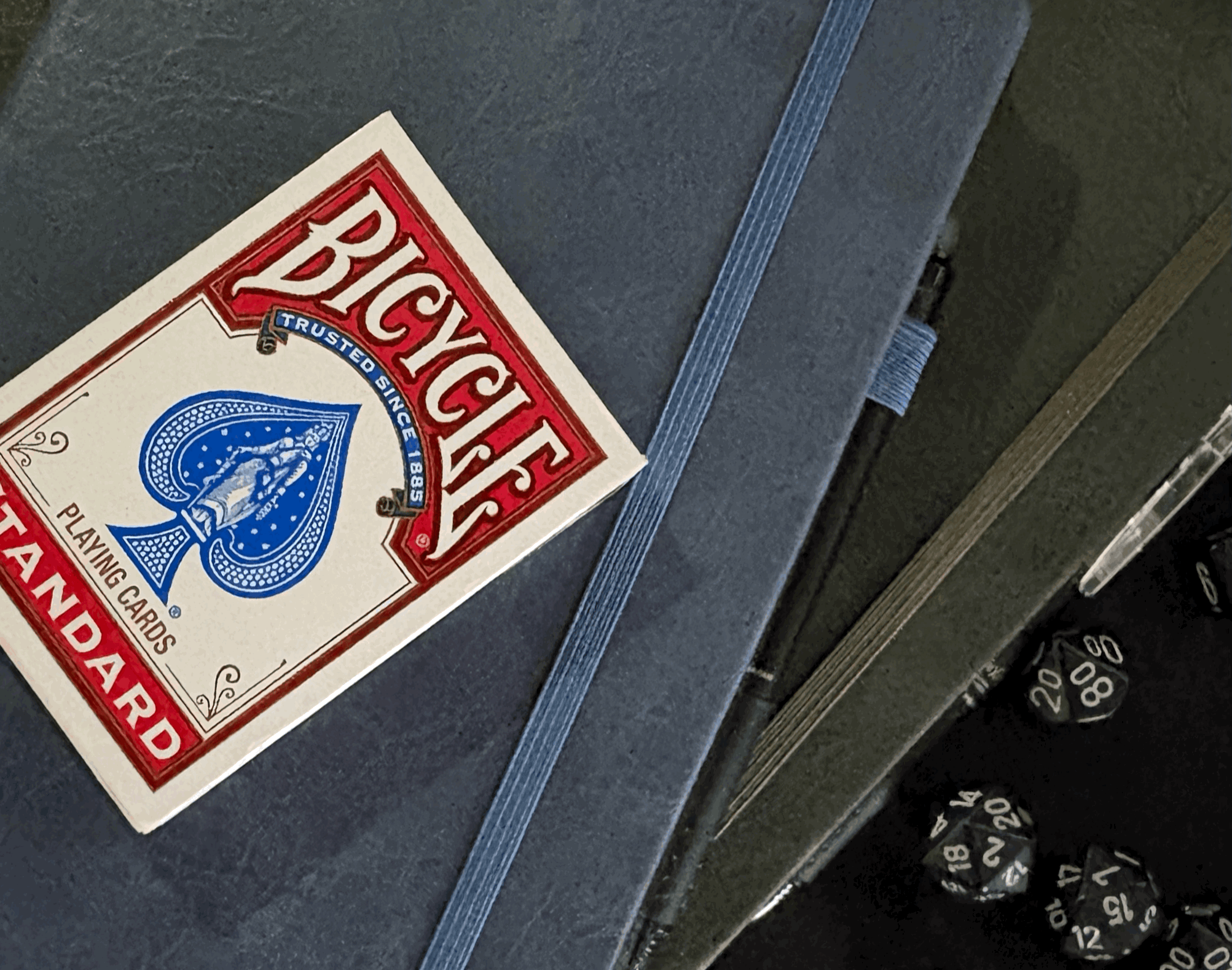
Playing cards and dice on a game mat - the tools of tabletop game design